
Conservation. Education. Recreation.
Search:
spacerspacer
 
MetroParks

2nd St. Market
Aullwood Garden
Carriage Hill
Cox Arboretum
Deeds Point
Eastwood
Englewood
Germantown
Hills & Dales
Huffman
Island
Possum Creek
RiverScape
Sugarcreek
Sunrise
Taylorsville
Twin Creek
Wegerzyn Gardens
Wesleyan

Regional Trails

 
Bottom graphic
spacer
 
Print icon
Find a Park
spacer
 
Print icon
Find a Program
spacer
 
Print icon
Reservations
spacer
Nature Play
spacer
curve graphic
Home > Get Outside > Nature Play
Share/Bookmark
 
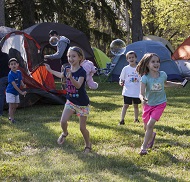
Recent studies show that children are smarter, cooperative, happier and healthier when they have frequent and varied opportunities for free and unstructured play outdoors. Over the past few Nature Playdecades, however, research has shown that children are spending less time engaging in unstructured outdoor play than they have in the past. Unstructured nature play is a non-adult lead activity, but does not mean there is no adult supervision. Time is spent outdoors in which the child is leading their own discoveries. Examples of nature play include creek walking, playing in mud or dirt, fort building, hide and seek, lifting up rocks, leaf piles, rock skipping, catching insects. It’s as simple as sharing your reactions to the sliminess of a salamander, the perfection of a tiny blossom or the unexpected rainbow in a mud puddle.

Benefits of Nature Play and Exploration:

  1. Interaction with nature before age 11 is likely to increase environmental awareness in adulthood
  2. Outdoor exploration allows children to develop courage
  3. Children who play outdoors are better able to cope when problems are presented to them
  4. Outdoor exploration allows children to develop better social skills
  5. In a study, children with AD/HD showed an increased ability to concentrate after spending time in a ‘green’ setting versus an indoor or urban setting

FREE educational opportunities for teachers and childcare providers:

  1. Take a field trip: Schedule a naturalist to meet you at a specific destination within MetroParks. Programs on-site can be adjusted to fit your current topics in the classroom. Popular programs include: nature walks, creek studies, mammal programs, and insect safaris.
  2. Invite a naturalist to your facility: naturalists are available to come to your classroom at no cost to you.  They will work with you to tailor a program that fits your current unit in the classroom or you can chose from a variety of ready-made programs to spark children’s interest in the outdoors.
  3. Explore around your school: even in your schoolyard, you can find all kinds of critters! Have the children collect some specimens and bring them inside for closer observation.
  4. Check out an education kit: Education kits are available to check out through the Germantown MetroPark Nature Center. These kits contain specimens, books, tools, and activities for children of all ages. A deposit is required and will be returned after kit use. View available kits here. For more info call: 937-855-7717.
  5. Project Wild Trainings: MetroParks occasionally offers training courses for the Project Wild Curriculum. Upon completion, participants receive the Project Wild K-12 Curriculum and Activity Guide which provides lesson plans and activities.

Nature Opportunities for Childcare Providers

How does your childcare center spend its summer? Inside, interacting with technology or traveling far distances paying for an indoor experience? Why not do something outdoors in nature that is engaging and local? Come explore our well marked trails, discover local wildlife, and investigate diverse habitats at a MetroPark close to you.
Learn More >>

Do:        

  1. Think like a child.
  2. Remember your own childhood play experiences in nature.
  3. Value play and exploration for its own attributes, without overt “education” being added.
  4. Value both social play (multiple children) and individual (quiet) play.
  5. Allow testing, adventure, failure, and the potential for minor injuries (e.g., bruises scrapes).
  6. Protect children from serious injuries.
  7. Mention unusual, appealing, and ephemeral natural history events/features that children can observe and enjoy.
  8. Model appropriate play in natural settings.

Don’t:

  1. Lecture or attempt to disgorge large amounts of information.
  2. Spread fear.
  3. Discourage exploration and adventure.
  4. Attempt to keep children from getting dirty or wet.
  5. Think like a teacher.
  6. Feel a need to play alongside the children.


RiverScape MetroPark
Nature Play in the Stillwater River
Nature Exploration
Children and Nature Network
line
The Children & Nature Network (C&NN) was created to encourage and support the people and organizations working nationally and internationally to reconnect children with nature. The network provides a critical link between researchers and individuals, educators and organizations dedicated to children's health and well-being.
 
line
 
spacer ad
s[acer
spacer
"Protecting the region's natural heritage and providing outdoor experiences that inspire a personal connection with nature."
Home
Special Interest

Families
Gardeners
Outdoor Recreation
Nature Lovers
Seniors
Teachers

Important Links

Contact Us
Safety
Rules and Regulations
Reservations
Alerts and Closures
Privacy Statement
Special Events

Main Navigation

Get Outside
Get Educated
Get Healthy
Get Green
Get Involved
About Us